Today we are comparing two budget phones which were launched last year, namely the Redmi 11 Prime and Infinix Note 12. Redmi and Infinix are known for their budget phones and we’re pitting them against each other.
The Redmi 11 Prime and Infinix Note 12i, both launched last year in September under the price range of ₹13,000. Let’s compare them and leave it to you to decide which one is better.

The Redmi 11 Prime comes with a flat design with a plastic back panel and frame. You can see the SIM tray with two SIM slots on the left side and on the right side, the volume rockers and the power button is placed. The phone has a rectangular camera island on the back with two big camera rings. It comes in three colours; Meadow Green, Thunder Black and Chrome Silver.
The Infinix Note 12i is also made of plastic but it feels and looks like glass because of its glossy design and features a crystal-type design on the camera module. We get a power button with a capacitive fingerprint sensor and volume rockers on the right and on the left side the SIM tray is placed. It also comes in three colours; Force Black, Alpine White, and Metaverse Blue.
2. Redmi 11 Prime vs Infinix Note 12i: DisplayThe Redmi 11 Prime is equipped with a 6.58-inch IPS LCD display with a resolution of 1080 x 2408 pixels. The display supports a 90Hz refresh rate and is protected by Corning Gorilla Glass 3.
On the other hand, the Infinix Note 12i features a 6.5-inch AMOLED display which also supports a 90Hz refresh rate. The display comes with a resolution of 1080 x 2400 pixels.
3. Redmi 11 Prime vs Infinix Note 12i: PerformanceRedmi 11 Prime is powered by the Mediatek Dimensity 700 SoC paired with 4GB and 6GB RAM. It runs on the Android 12-based MIUI 13 OS. The device comes in three storage options and that is 64GB 4GB RAM, 128GB 4GB RAM, and 128GB 6GB RAM. It packs a 5000mAh battery with 18-watt of fast charging support.
Infinix Note 12i is equipped with MediaTek’s Helio G85 processor paired with 4GB and 6GB RAM as well. It comes in two storage options which are 64GB 4GB RAM, and 1d28GB 6GB RAM. The phone runs on Infinix OS XOS 10.6 based on Android 12. It also packs a 5000mAh battery but with 33-watt of fast charging support.
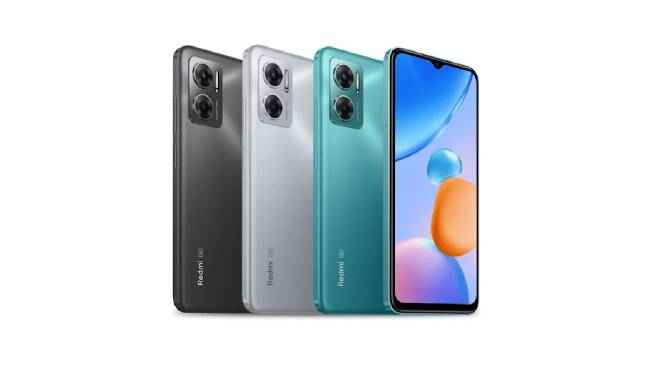
Redmi 11 Prime comes with a dual camera setup holding a 50-megapixel primary camera and a 2-megapixel depth sensor. It sports a 5-megapixel selfie shooter.
Infinix Note 12i also comes with a dual camera setup which has a 50-megapixel camera and a 2-megapixel depth sensor. It sports an 8-megapixel front-facing camera.
5. Redmi 11 Prime vs Infinix Note 12i:Redmi Note 11 Prime is available on Amazon at a price of ₹13,999. Whereas, the Infinix Note 12i comes at a cheaper price of ₹9,999 on Flipkart.
from Mobile Phones News https://ift.tt/jNnsRVq
Comments
Post a Comment