Infinix Smart 7 has launched in India at a starting price of ₹7299 which puts it in competition with similarly specced phones like Moto E13 and Redmi 10A. Moto E13 launched in India on Feb 8 and its 4+64GB variant costs ₹7,999 while the Redmi 10A launched starts at ₹7,649 for the 3+32GB model.
Infinix Smart 7 compared against Redmi 10A and Moto E131. Design
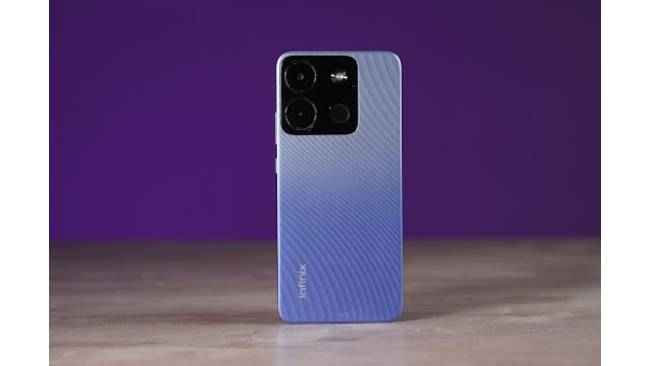
Moto E13 is the lightest of the lot at just 179.5 grams. Infinix Smart 7 is 207 grams and Redmi 10A is 194 grams. All of them have plastic bodies.
Moto E13 is also the slimmest at 8.5 mm while the Infinix Smart 7 is 9.37mm and Redmi 10A is 9mm.
2. Display
All phones have HD screens with a waterdrop notch. While the other two phones offer IPS LCD panels, the Infinix Smart 7 has got a TFT LCD screen.
3. Processor and Memory
Infinix Smart 7 packs a Unisoc Spreadtrum SC9863A1 SoC whereas the Moto E13 is powered by a 12nm Unisoc T606 chipset, and Redmi 10A carries a 12nm Mediatek Helio G25 processor.
Smart 7 is available in a single 4GB RAM and 64GB storage option. You can grab the Moto E13 with up to 4GB RAM+64GB storage and Redmi 10A with up to 6GB RAM and 128GB storage.
Infinix Smart 7 sticks to Android 12. Redmi 10A ships with Android 11. It’s only Moto E13 that gives you Android 13, albeit the Go edition.
4. Battery and Connectivity
Moto E13 and Redmi 10A house a 5000mAh power source and 10W charging capability. Infinix has got a bigger 6000mAh battery. To charge the phones though, the Infinix and Redmi phones feature a somewhat dated micro-USB port. The Moto E13 is the only one with a USB-C socket.
Infinix Smart 7 and Moto E13 offer WiFi ac support while Redmi has got WiFi n only. They all bring Bluetooth 5.0 support and GPS.
Only Infinix Smart 7 and Moto E13 has got FM Radio.
5. Camera
While all phones have a 13MP primary camera, the Infinix Smart 7 has a 0.3MP depth sensor, which should probably be useful for portrait mode. The front camera is also a 5MP shooter on all three.
While the video recording goes up to 1080p 30FPS on Moto and Redmi phones on both front and back, the Infinix Smart 7 has got an FHD video option on the rear only. The front camera is limited to 720p videos.
Price and AvailabilityInfinix Smart 7 is going to be available via Flipkart at ₹7,299 starting February 27 at 12 PM.
Moto E13 is currently available via Flipkart at ₹7,999 for the 4+64GB variant.
Finally, we have the Redmi 10A whose 3+32GB model is currently available at ₹7,688. Its 4+64GB model retails for ₹8,599.
TOOFAAN aa gaya hai! The all new Infinix SMART 7 is here at a special launch day price of just Rs. 7,299. Sale starts 27th Feb, 12 noon, only on Flipkart Click here to know more: https://ift.tt/HpUGKI0 pic.twitter.com/cHvzdo9fWl
— Infinix India (@InfinixIndia) February 22, 2023from Mobile Phones News https://ift.tt/sLA5WFv
Comments
Post a Comment